Availability Checking Internal Implementation
This article step by step explores @avaliable’s essence.
WWDC 2017: What’s New in LLVM Apple introduced a new API availability checking method, using @avaliable and similar syntax. Details see this document Marking API Availability in Objective-C
Among them @available() can be used in conditional statements, as below:
if (@available(iOS 11, *)) {
    // Use iOS 11 APIs.
} else {
    // Alternative code for earlier versions of iOS.
}
Believe this is also most familiar to everyone, then what is @avaliable?
Simplest Example
We create a new iOS project, then in AppDelegate call code below:
void test_available() {
    if (@available(iOS 11, *)) {
        // Use iOS 11 APIs.
        NSLog(@"ios11");
    } else {
        // Alternative code for earlier versions of iOS.
        NSLog(@"ios other");
    }
}
Example code see here
Reverse to See
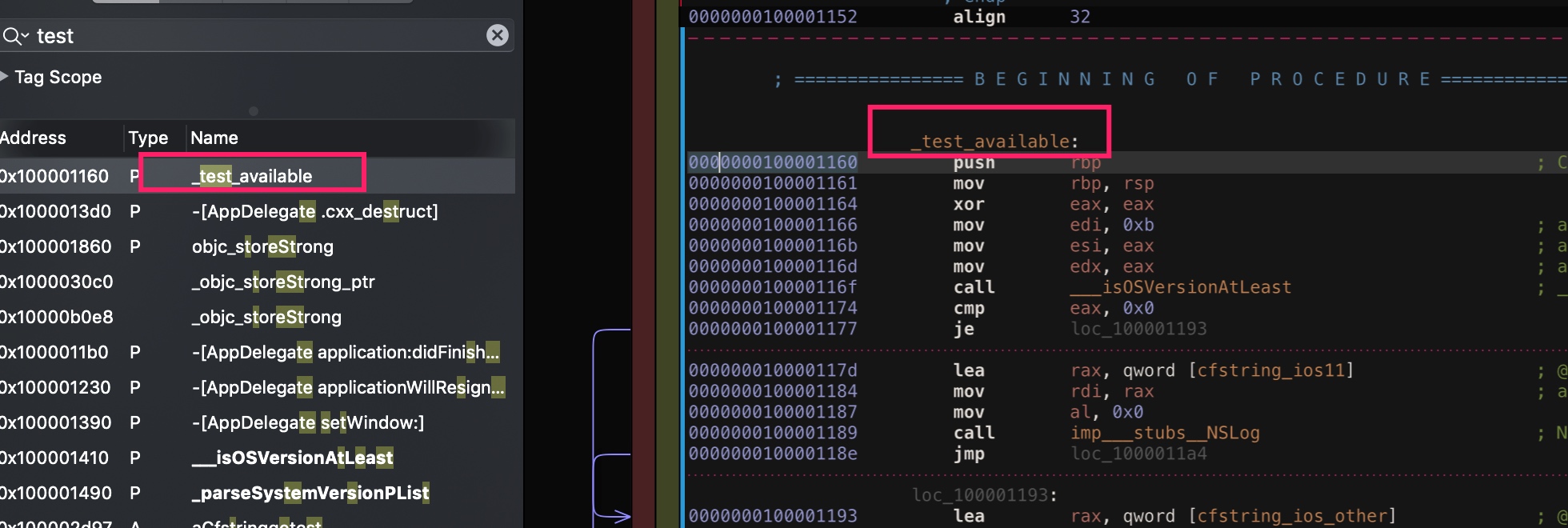
After compilation (simulator is fine), use Hopper to open generated executable, find this test_available, as shown:
Look at decompiled pseudo code:
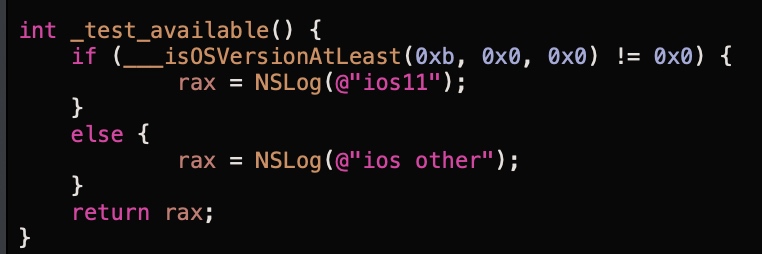
Can see called ___isOSVersionAtLeast this function, 0xb is iOS 11, estimate following two 0x0 are second and third version digits.
Then Hopper finds this function,
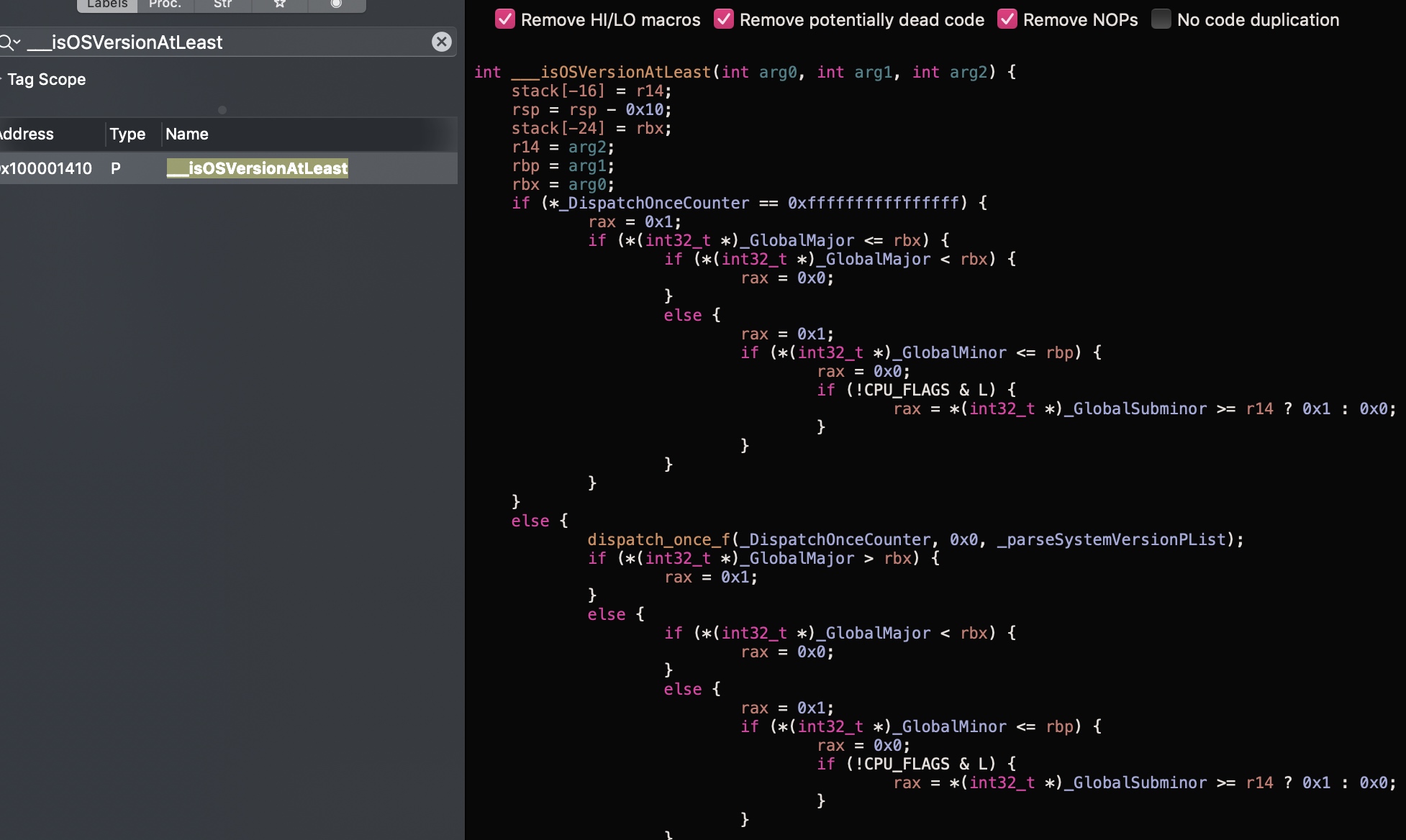
At a glance, guess roughly in dispatch_once got current system version, then assigned to _GlobalMajor, _GlobalMinor and _GlobalSubminor three global variables.
Then how does dispatch_once get system version? Hopper’s disassembled pseudo code seems can’t see what block executed. Switch to assembly code view, can see:
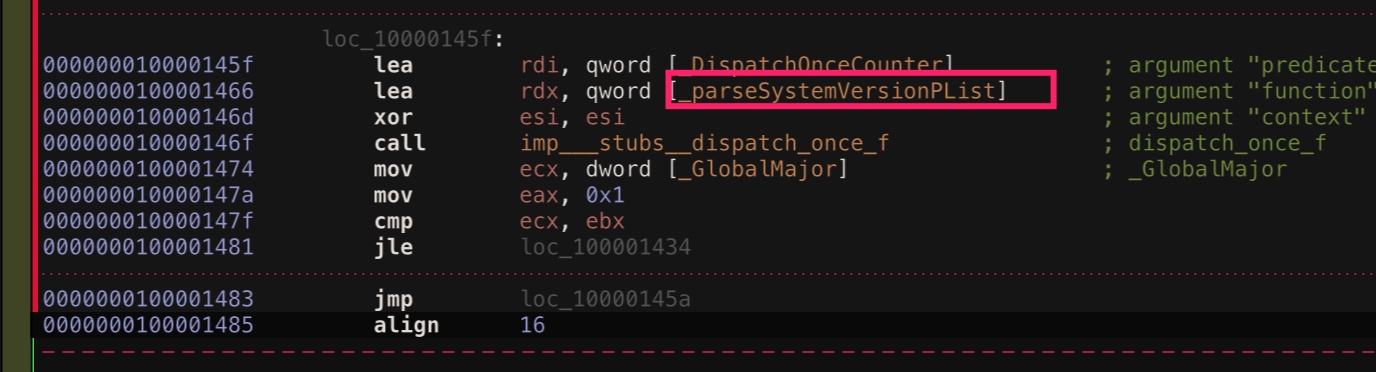
Here called _parseSystemVersionPList function, continue looking at this function:
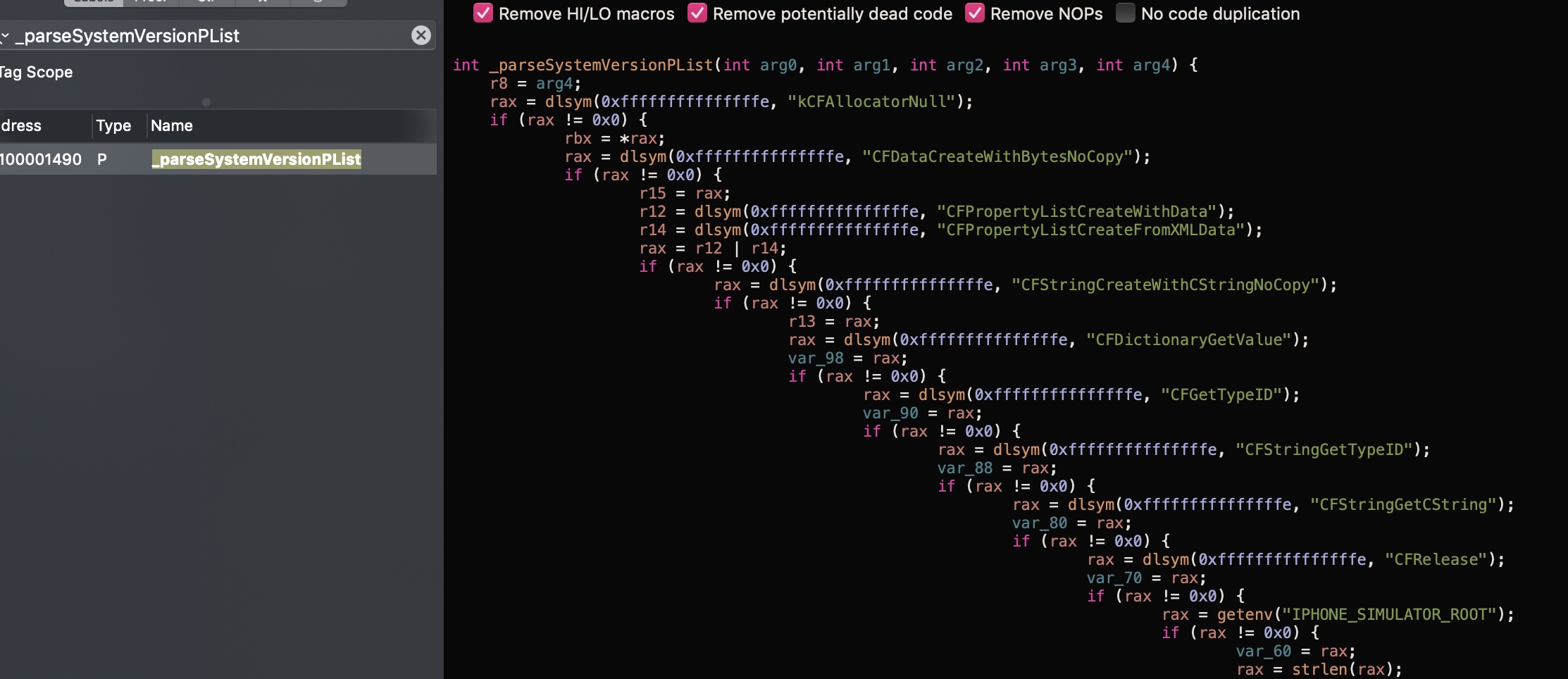

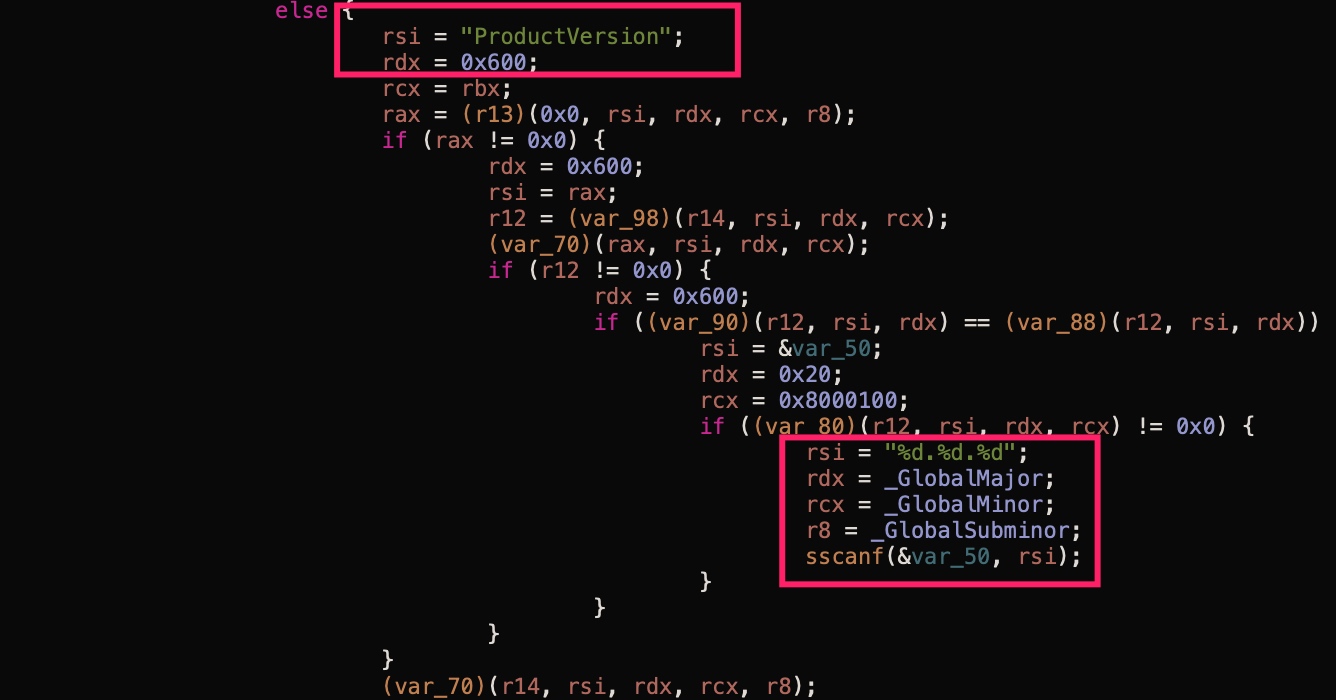
See operation on this file /System/Library/CoreServices/SystemVersion.plist, and there’s a fopen. Then run Xcode, breakpoint at this fopen.
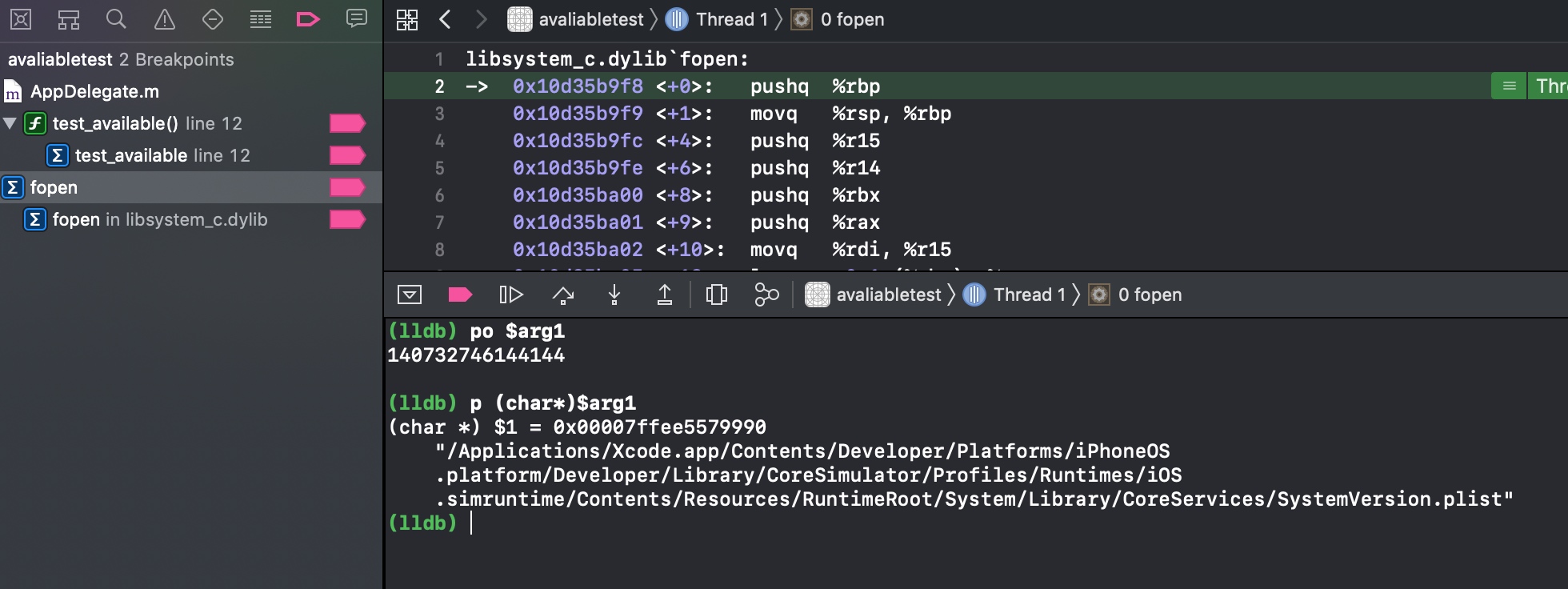
This file path:
/Applications/Xcode.app/Contents/Developer/Platforms/iPhoneOS.platform/Developer/Library/CoreSimulator/Profiles/Runtimes/iOS.simruntime/Contents/Resources/RuntimeRoot/System/Library/CoreServices/SystemVersion.plist
We open to see,
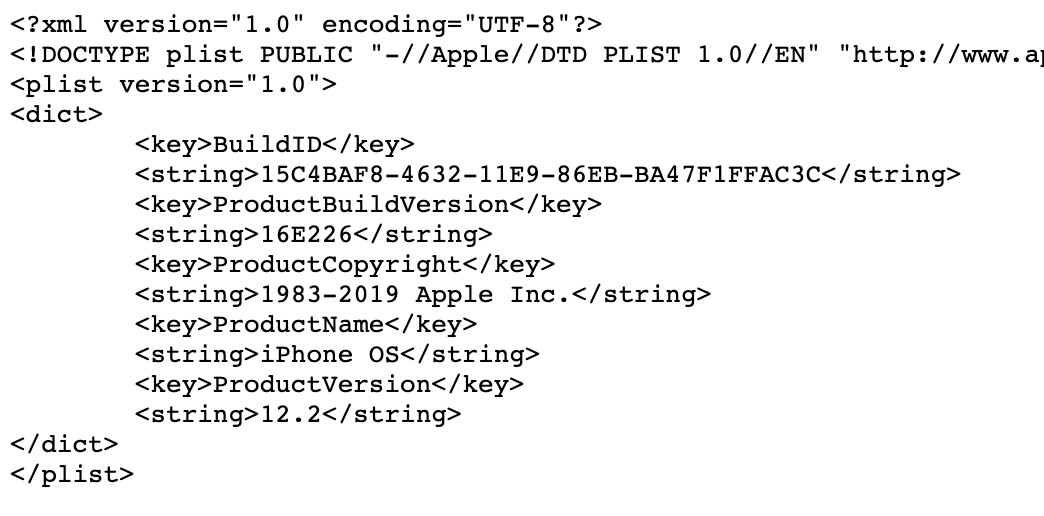
Then understand, finally is accessing this file, get ProductVersion in it, and through sscanf parse out three _GlobalMajor, _GlobalMinor and _GlobalSubminor three values.
sscanf so old, seeing it, seems back to year just learned C language.
Stage Summary
From current analysis, @available(iOS 11, *) finally becomes following pseudo code:
_GlobalMajor
_GlobalMinor
_GlobalSubminor

void _parseSystemVersionPList() {
    char *path = ".../System/Library/CoreServices/SystemVersion.plist";
    fp = fopen(path)
    read from fp
    parse ProductVersion
    sscanf into _GlobalMajor,_GlobalMinor,_GlobalSubminor
}

BOOL ___isOSVersionAtLeast(major,minor,subminor) {
    static dispatch_once_t onceToken;
    dispatch_once(&onceToken, ^{
        _parseSystemVersionPList();
    });
    return compare major,minor,subminor with _GlobalMajor,_GlobalMinor,_GlobalSubminor
}
How Clang Handles
Related code we search from https://github.com/llvm-mirror/clang/,
AST for representing avaliable: AvailabilitySpec.
https://github.com/llvm-mirror/clang/blob/master/include/clang/AST/Availability.h
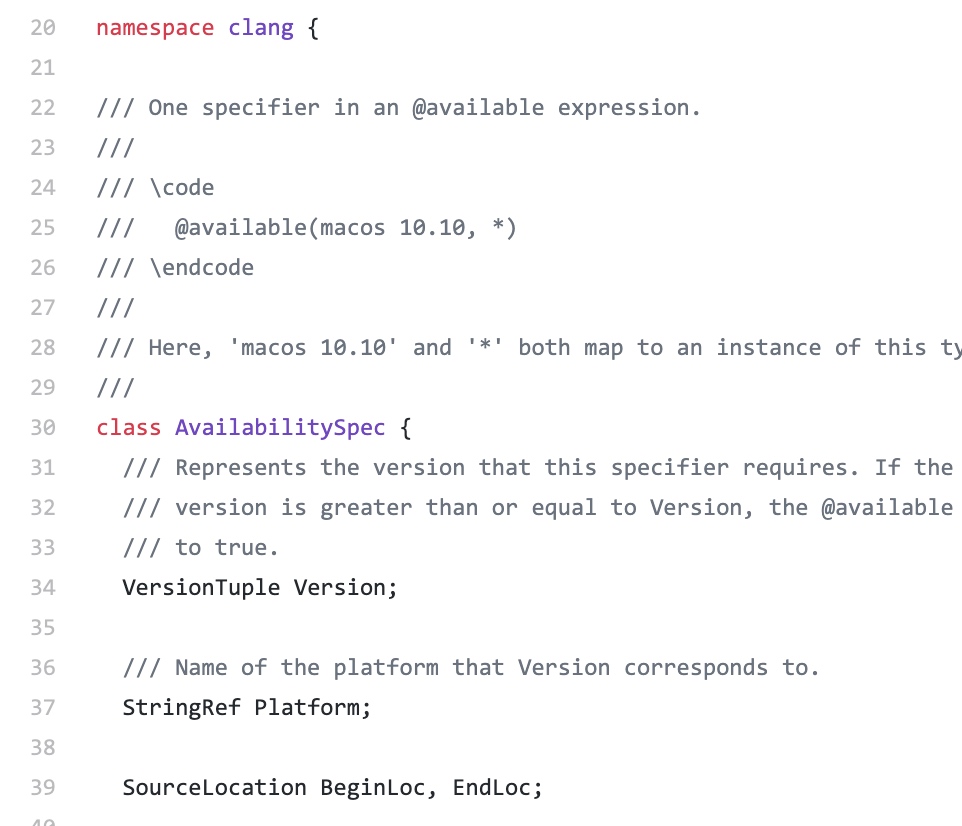
Also found code for creating function,
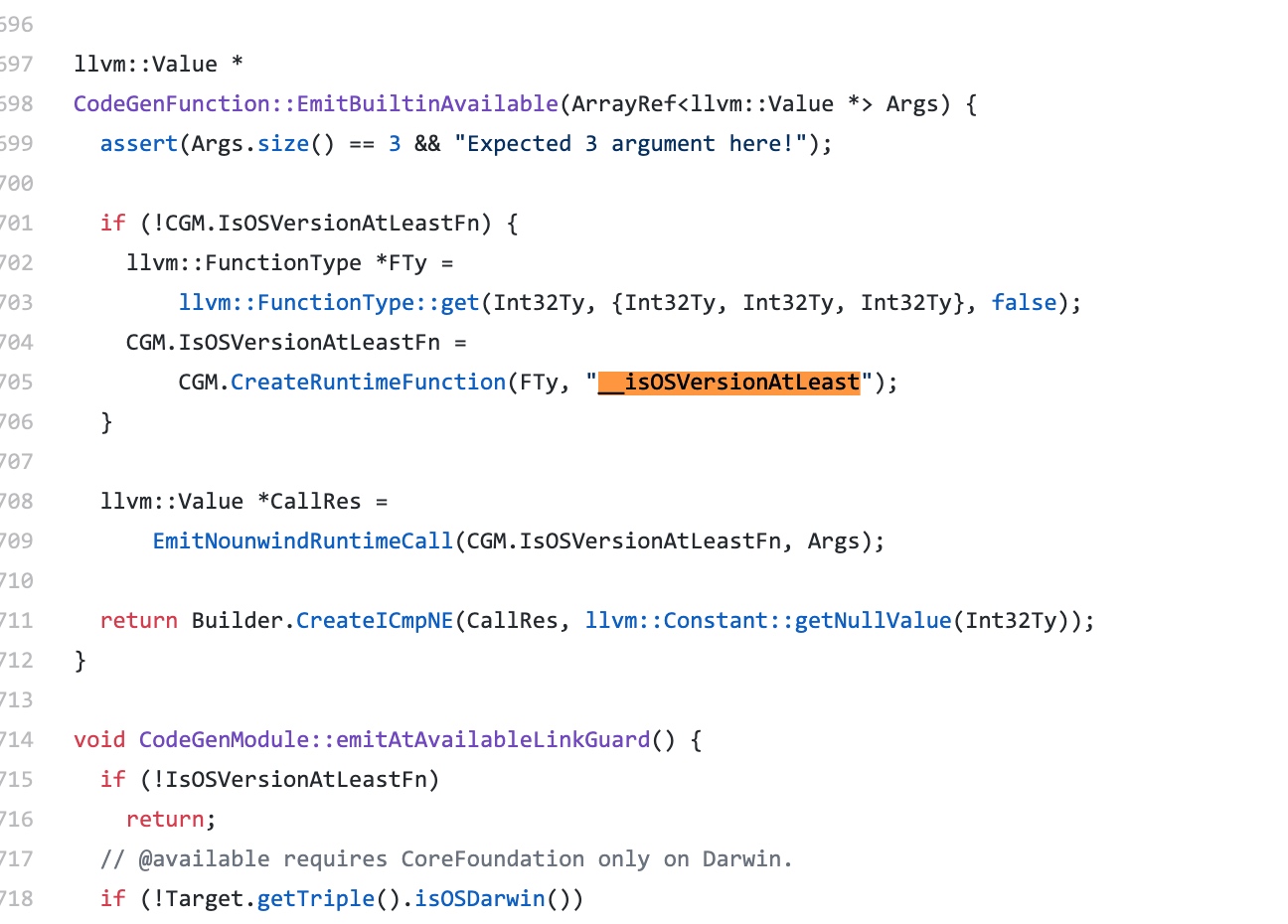
Specifically I’m not too familiar with llvm, won’t elaborate (also can’t say), interested search yourself.
Summary Again
Understanding this essence, using in future will be more confident. Very interesting.
Welcome to subscribe :)